

| DifficultyEasy | Total Time5 min | Prep Time5 min | Cook Time0 min |
| ServesN/A | Cost Per Serving$25-75 | Calories0 kcal | Recipe TypeGuide |
This Grill Gloves Guide will help you choose the right heat resistant gloves for safe and controlled grilling. The right BBQ gloves make the difference between confident handling and dangerous accidents.
Whether you’re a grilling expert or just starting out, understanding grill glove options protects your hands and improves your outdoor cooking experience.
Why You’ll Love This Guide
- Safety First – Learn how proper gloves prevent burns and injuries while grilling.
- Material Breakdown – Compare leather, silicone, and aramid fiber options to find your best fit.
- Feature Focus – Understand heat ratings, grip technology, and wrist protection features.
- Buying Smart – Get tips on sizing, budget considerations, and matching gloves to your grilling style.
- Long-Term Value – Proper care and maintenance tips to extend glove life and performance.
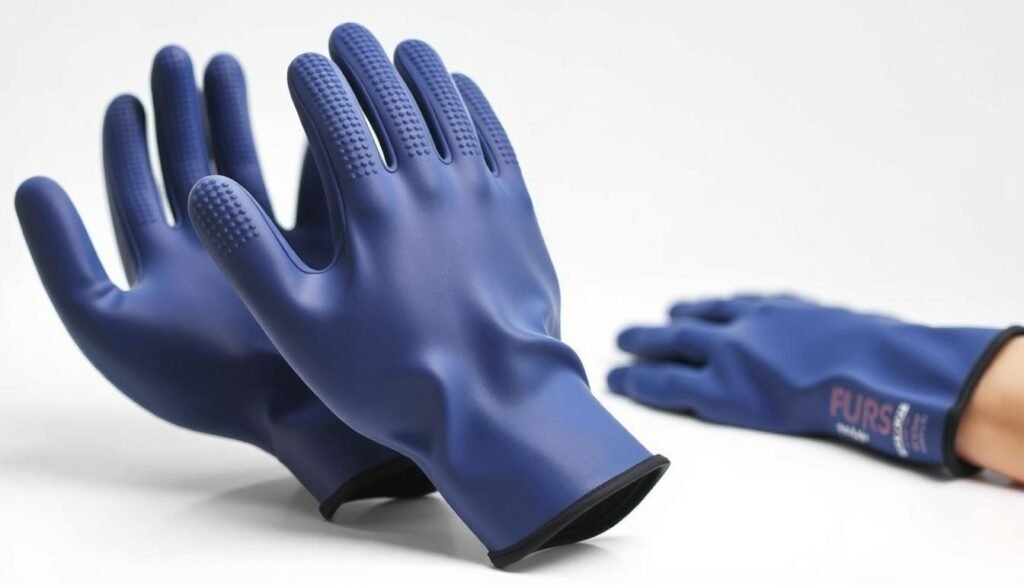
Grill Gloves Guide
Hand protection matters when working around high temperatures, sharp grill grates, and heavy equipment. Without proper gloves, grilling becomes unnecessarily dangerous.
Why Hand Protection Matters When Grilling
Burns from hot surfaces and grease splatters are the most common grilling injuries. Heat resistant gloves act as a barrier between your skin and dangerous temperatures.
The best grill gloves balance safety with functionality, protecting your hands while maintaining the dexterity needed for precise grilling tasks.
What Makes Grill Gloves Essential BBQ Accessories
Grill gloves differ significantly from regular oven mitts in both heat resistance and grip technology. They’re designed specifically for the high-heat, extended-contact nature of grilling.
Quality grill gloves provide superior grip and control, allowing you to handle grill components and food with confidence and precision.
Types of Grill Gloves Available
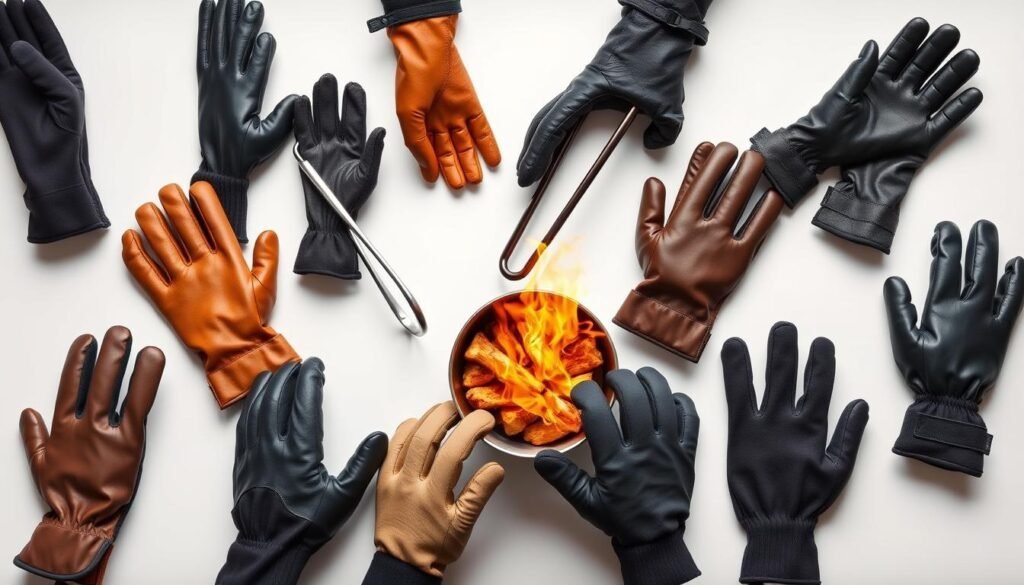
- Leather Grilling Gloves – Durable and naturally heat resistant with excellent grip, though they require regular conditioning
- Silicone Grill Gloves – Waterproof and easy to clean with good heat resistance, more affordable than leather options
- Aramid Fiber and Kevlar – Superior heat and cut protection, lightweight and flexible for precise work
- Hybrid Designs – Combine multiple materials for enhanced protection, grip, and comfort features
Essential Features to Look For
Heat resistance ratings should handle temperatures up to 500 degrees F or higher for serious grilling applications. Look for clear temperature specifications from manufacturers.
Grip enhancement technologies include textured palms, silicone coatings, and specialized finger patterns that prevent slipping on wet or greasy surfaces.
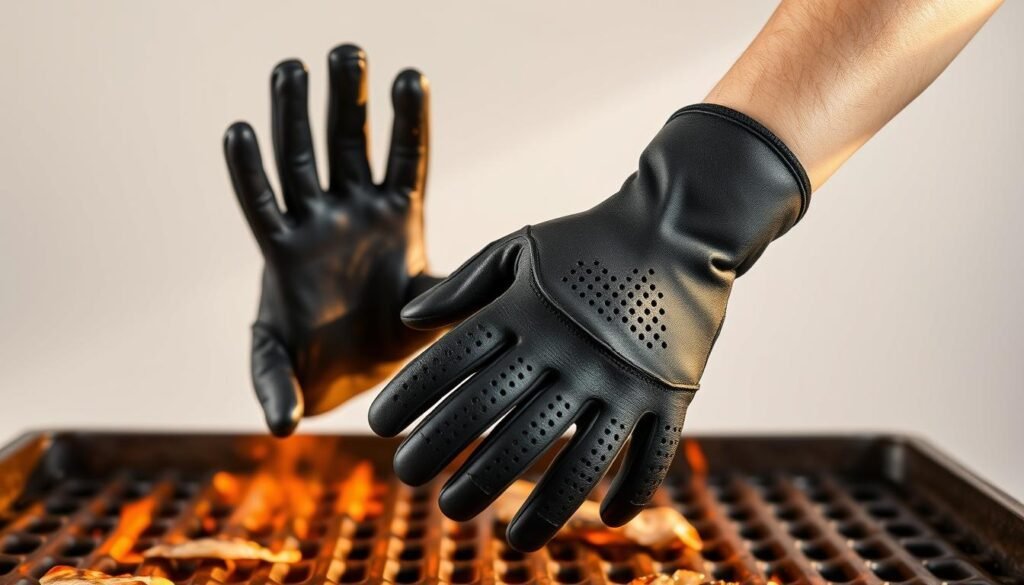
- Heat resistance rating of 500 degrees F or higher
- Grip enhancement technologies for secure handling
- Comfort and dexterity for extended grilling sessions
- Wrist protection and adequate coverage length
Choosing the Right Fit and Style
Your grilling frequency and style determine the best glove type for your needs.
- Measure your hand circumference and length for proper sizing.
- Consider aramid fiber or silicone for frequent high-heat grilling.
- Match your budget to expected usage – frequent grillers benefit from premium materials.
Proper Usage Techniques
Safe Handling – Wear properly fitted gloves when handling hot grill components, maintaining firm grip on handles and avoiding direct contact with flame zones.
Food Manipulation – Use slow, deliberate movements when handling food directly, taking advantage of enhanced grip for slippery or delicate items.
Maintenance and Care
Leather Gloves – Clean with mild soap and water, condition regularly to prevent cracking and maintain flexibility.
Silicone Gloves – Wash with soap and warm water or run through dishwasher cycle for thorough cleaning.
Aramid/Kevlar – Follow manufacturer instructions, typically requiring hand washing with mild detergent and air drying.
Storage and Longevity
Store grill gloves in a dry, cool location away from direct sunlight to prevent material degradation. Avoid folding or creasing to maintain structural integrity.
Hanging storage or laying flat helps preserve glove shape and performance over time.
Estimated Cost Per Pair
- Basic silicone gloves – ~$15-25
- Quality leather gloves – ~$30-50
- Premium aramid/Kevlar – ~$40-75
- Hybrid specialty designs – ~$35-60
Total investment range: ~$15-75 depending on material and features.
Prices are estimates based on average US retail costs and will vary by brand and retailer location.
What to Look For When Shopping
Focus on heat resistance ratings that match your grilling temperatures and cooking style. Higher ratings provide better protection but may sacrifice some dexterity.
Consider grip technology and wrist coverage based on your typical grilling tasks and the types of food you handle most often.
Recommended Grill Gloves
* As an Amazon Associate I earn from qualifying purchases at no extra cost to you.
Frequently Asked Questions
What materials are grill gloves made from?
Grill gloves come in leather, silicone, aramid fiber, and Kevlar materials. Each type offers different benefits for heat resistance, grip, and durability.
How do I choose the right size grill gloves?
Measure your hand circumference and length, then check the manufacturer’s size chart. Proper fit ensures comfort and functionality during grilling.
Can I use regular oven mitts for grilling?
Oven mitts provide some protection but aren’t designed for grilling’s high heat and extended contact. Dedicated grill gloves offer better safety.
How do I clean different types of grill gloves?
Silicone gloves wash with soap and water, leather gloves need leather cleaner and conditioner, and aramid fiber gloves follow manufacturer instructions.
What heat resistance rating should I look for?
Look for gloves rated to handle temperatures up to 500 degrees F or higher, depending on your grilling style and typical cooking temperatures.
Do grill gloves only protect from heat?
No, quality grill gloves also protect from cuts and abrasions while providing enhanced grip to prevent dropping food or tools during grilling.
Can I use grill gloves for other cooking tasks?
Yes, grill gloves work well for any high-heat cooking tasks including oven work and stovetop cooking with hot pans.
How should I store my grill gloves?
Store in a dry, cool location away from direct sunlight, avoiding folding or creasing to maintain material integrity and performance.
What grip features should I look for in grill gloves?
Look for textured palms, silicone coatings, or specialized grip patterns that help secure handling of both wet and dry grilling tools and food. The right Grill Gloves make all the difference in safe, controlled grilling.
Want to save this for later? Pin it!


From quick grilling techniques to simple gear advice, Ryan helps beginners and busy home cooks fire up great meals without over-complicating it. Whether you’re using charcoal, gas, or a portable grill, Ryan’s goal is to make grilling approachable, fun, and full of flavor.


